Publish and host the release
Run dotnet publish, deploy the framework-dependent or self-contained output, and configure the required process manager, proxy and environment.

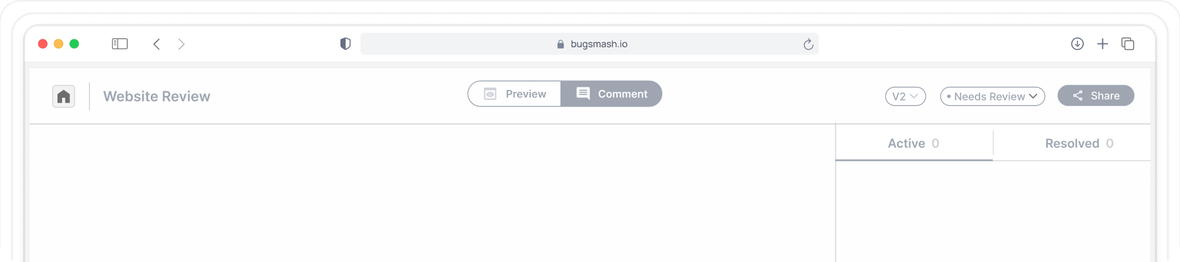
Paste a browser-accessible ASP.NET Core deployment, send one review link, and collect comments on the pages and application states people will actually use. Every note keeps its route, browser, device and screenshot context.


Loved by1,250+Agenciesand companies in 100+ countries
dotnet publish creates the files required to run an ASP.NET Core app. Deployments can be framework-dependent or self-contained, and a hosted app may use a process manager and a reverse proxy. Runtime behavior also varies across Development, Staging and Production.
Four boundaries keep review representative and safe:
Use dotnet publish and deploy its output to the intended host. The publish folder contains assemblies, dependencies and, depending on the model, the .NET runtime.
ASP.NET Core deployments may require a process manager and can sit behind a reverse proxy such as IIS or Nginx. Review through the same public entry point planned for release.
Microsoft warns not to enable or publicly share the Developer Exception Page outside Development because it can expose detailed request and exception information.
Pasting a URL does not bypass an authentication scheme, authorization policy, or hosting access. Supply permitted test access for protected endpoints.
 BugSmash adds the review layer around the published application:
How it works
Run dotnet publish, deploy the framework-dependent or self-contained output, and configure the required process manager, proxy and environment.
Paste the accessible application URL into BugSmash and share the generated link. Reviewers comment on the rendered interface without source or server access.
Each comment keeps the page URL, selected element, screenshot, browser and device so the team can reproduce the state.
Attach feedback to the browser-visible output instead of translating it into server-code language.
Check desktop, tablet and mobile views and retain the viewport with every report.
The page URL, browser, device and screenshot arrive with each comment.
Install the Feedback Widget in the application so permitted reviewers can comment on protected roles, forms and workflows from inside their browser session.
Check user-facing routes together with public web-root assets and production error handling.
Preserve decisions independently of later .NET, view, asset, environment or hosting changes.
BugSmash reviews a browser-accessible ASP.NET Core frontend. The published output, runtime environment, middleware and hosting access determine what reviewers can open.
| Your URL | Review by URL | What to do |
|---|---|---|
| Public ASP.NET Core production deployment | Works | Paste the deployed URL and review the browser-visible application. |
| Accessible ASP.NET Core staging deployment | Works | Use the staging URL after confirming its environment and configuration represent the release. |
| Framework-dependent or self-contained deployment | Works | Review the hosted URL after the selected publish model is running correctly. |
| Preview protected by supported Basic Auth | Works | Provide the permitted Basic Auth credentials through the supported review flow. |
| localhost from dotnet run or a launch profile | Not directly | Deploy the published app or expose the local server through a secure HTTPS tunnel. |
| Endpoints behind login, roles or SSO | Use the Widget | Install the Feedback Widget in the application so reviewers can comment while remaining inside the authenticated browser session. |
Add the BugSmash script to the browser-facing ASP.NET Core UI when reviewers must remain inside authenticated or stateful flows. Install it in the rendered layout or client application used by the routes under review.
Keep product, design, engineering and QA reviewing the same published application and environment.

Review complete routes, responsive layouts and production error states on a deployment stakeholders can open.
See how
Receive visual reports with the route, selected element, browser, device and screenshot already attached.
See how
Validate environment, authentication, public assets and hosting behavior before release.
See howA comment on the deployed application becomes a task with its route, selected element, screenshot, browser and device context attached.
Context stays attached from comment to completion.
Send to your workflow
The destination changes. The context does not.
 Jira
Jira ClickUp
 Monday
 Asana
Asana Trello
 Slack
Slack Linear
 Todoist
 Notion
 Airtable
 Zapier
 Make
Make n8n
n8n Webhooks
Keep the application, product PDF, walkthrough video, campaign images, email and presentation in one review project with one approval trail.

 MayaMake this hero image full-bleed
 product-launch.mp4
 LeoTrim the intro to 0:03
 AvaSmooth these edges a bit
 SamUpdate the Q3 numbers
 Up to 40% off
 NoahStronger CTA copy here
 ZoeAlign the chart legend
This year marked our strongest period of growth to date. Revenue climbed 42% year over year while our customer base expanded across eleven new markets, driven by continued investment in product.

Operational efficiency improved as automated workflows reduced manual review time by nearly a third. Looking ahead, we plan to double down on infrastructure, deepen key partnerships, and ship the roadmap our customers have been asking for.
 EllaTighten this paragraph
 TheoBoost the warm tones
 MiaCut the dead air at 1:12
Yes. The content covers the current cross-platform ASP.NET Core hosting, environment, error-handling, authentication and static-file documentation.
Paste an accessible ASP.NET Core application URL and send the first review link in under a minute.