Publish the intended review state
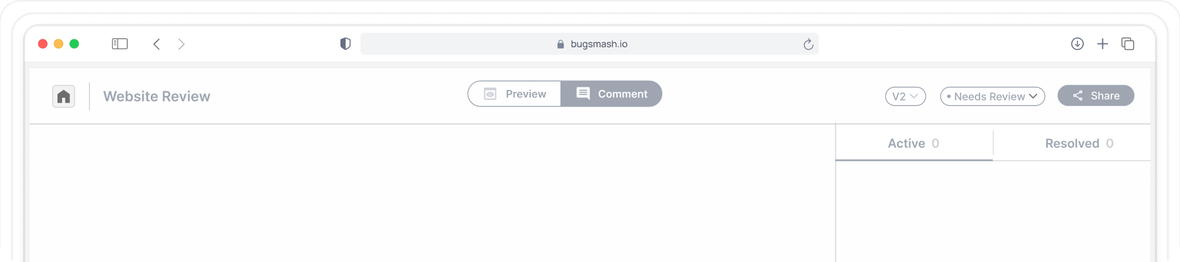
Finish the builder edits and use Publish when the changes should appear on the public WordPress frontend and create a WordPress revision.

Paste the browser-accessible WordPress frontend URL, send one review link, and collect comments on the page visitors will actually see.


Loved by1,250+Agenciesand companies in 100+ countries
Beaver Builder provides its own editing and publishing workflow inside WordPress. BugSmash reviews the browser-accessible frontend selected for stakeholder review.
Four documented boundaries matter before sharing a page:
Save Draft exits the builder and keeps the session's changes visible only while editing in Beaver Builder.
Beaver Builder documents Publish as making changes live and accessible to the world when the site itself is public.
The WordPress Revisions workflow applies to published changes, not saved drafts. Discard can remove all saved, unpublished work since the last publish.
Beaver Builder access settings can grant unrestricted editing, apply granular restrictions, or prevent selected roles from opening the builder.
 BugSmash keeps review on the rendered frontend:
How it works
Finish the builder edits and use Publish when the changes should appear on the public WordPress frontend and create a WordPress revision.
Paste the published frontend URL into BugSmash. Reviewers can comment on the rendered page without receiving WordPress or Beaver Builder access.
Use the attached page, screenshot, browser, operating system, and viewport context to update the layout and publish the next review state.
Attach feedback to the visible frontend instead of describing a row, column, or module in a separate message.
Review browser widths alongside Beaver Builder's Extra Large, Large, Medium, and Small responsive editing views.
Keep the page URL, screenshot, browser, operating system, and viewport size with each comment.
Let stakeholders review the frontend without changing WordPress roles or Beaver Builder access settings.
Publish an intentional state for review so the WordPress revision and the frontend being discussed stay aligned.
When the rendered frontend permits the BugSmash script to be installed, use the Feedback Widget inside a session reviewers are already authorized to use.
Choose the frontend URL representing the state stakeholders should see. Builder access and frontend access are separate decisions.
| Your URL | Review by URL | What to do |
|---|---|---|
| Public published Beaver Builder page | Works | Paste the visitor-facing WordPress URL and start the review. |
| Public WordPress staging frontend | Works | Use the staging URL after confirming reviewers can reach it and it contains the intended published state. |
| Site protected by supported Basic Auth | Works | Use the accessible Basic Auth URL; BugSmash lists Basic Auth-protected websites as supported. |
| Saved Beaver Builder draft | Not published | Publish the intended changes to an accessible frontend before asking external reviewers to assess them. |
| Frontend behind login or SSO | Use the Widget | Pasting a URL does not bypass application login or SSO. If the script can be installed on the rendered frontend, use the Feedback Widget inside the authenticated session. |
| Beaver Builder or WP Admin URL | Not the review surface | Share the rendered frontend instead of granting builder access for visual feedback. |
Where the WordPress frontend permits the BugSmash script to be installed, use it when authorized reviewers must stay inside a logged-in or stateful experience. Existing WordPress access still determines which pages they can open.
Keep page building, WordPress permissions, frontend review, and client approval distinct while every comment stays attached to the rendered page.

Send clients a frontend review link without expanding WP Admin or Beaver Builder permissions.
See how
Review layout, copy, and responsive behavior on the published page with every note in context.
See how
Receive the exact URL, screenshot, browser, operating system, and viewport needed to reproduce an issue.
See howRoute an actionable frontend comment to the team with its visible location and technical browser context preserved.
Context stays attached from comment to completion.
Send to your workflow
The destination changes. The context does not.
 Jira
Jira ClickUp
 Monday
 Asana
Asana Trello
 Slack
Slack Linear
 Todoist
 Notion
 Airtable
 Zapier
 Make
Make n8n
n8n Webhooks
Keep the website beside campaign graphics, PDFs, videos, presentations, and other client assets with one approval trail.

 MayaMake this hero image full-bleed
 product-launch.mp4
 LeoTrim the intro to 0:03
 AvaSmooth these edges a bit
 SamUpdate the Q3 numbers
 Up to 40% off
 NoahStronger CTA copy here
 ZoeAlign the chart legend
This year marked our strongest period of growth to date. Revenue climbed 42% year over year while our customer base expanded across eleven new markets, driven by continued investment in product.

Operational efficiency improved as automated workflows reduced manual review time by nearly a third. Looking ahead, we plan to double down on infrastructure, deepen key partnerships, and ship the roadmap our customers have been asking for.
 EllaTighten this paragraph
 TheoBoost the warm tones
 MiaCut the dead air at 1:12
No. Beaver Builder says Save Draft exits the editor while keeping those changes visible only inside the builder.
Paste a published frontend URL and send a focused review link without opening the WordPress builder to every stakeholder.