Build and deploy the intended release
Run the production build, clean stale output when required, and publish the resulting public directory or configured destination to the final host or an accessible preview.

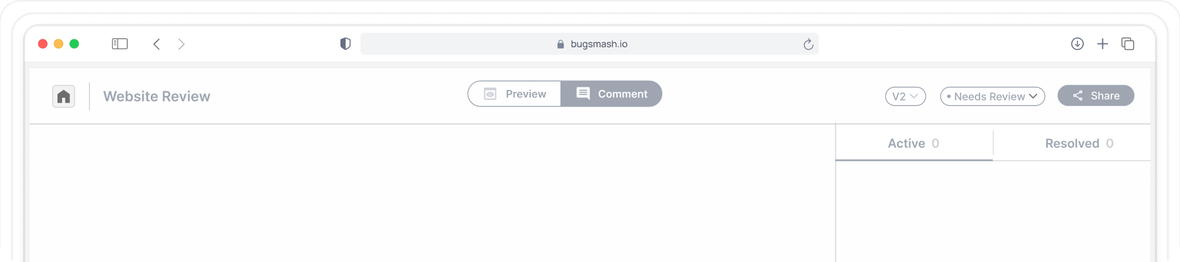
Paste the browser-accessible URL for your Hugo deployment, send one review link, and collect comments on the pages your visitors will actually open. Every note keeps its page, browser, device and screenshot context.


Loved by1,250+Agenciesand companies in 100+ countries
The Hugo CLI builds the project into the public directory by default. That directory can be uploaded to a static host or deployed through CI/CD. The hugo deploy command can send it to a configured cloud-storage target when Hugo's deploy or extended/deploy edition is installed.
Four build and publishing details still shape the review:
It builds and serves the site at a local address, watches project files, and refreshes the browser with LiveReload. Use a deployed URL for a durable external review.
Hugo overwrites existing build files but does not delete files from public by default. Clean the destination manually or use cleanDestinationDir when the review must represent only the current build.
Hugo omits pages marked as drafts, pages dated or scheduled for the future, and expired pages unless the corresponding build options are enabled. Descendants of draft, future and expired branch pages can still be published unless build options are applied through cascade.
Hugo defines baseURL as the absolute published URL, including protocol, host, path and trailing slash. Configure it for the deployment so generated links and assets resolve from the reviewed location.
 BugSmash adds the review layer around the hosted site:
How it works
Run the production build, clean stale output when required, and publish the resulting public directory or configured destination to the final host or an accessible preview.
Paste the deployed URL into BugSmash and share the generated link. Reviewers comment on the hosted pages without needing the Hugo project or repository.
Each item carries the page, selected element, screenshot, browser and device. Assign it, update its status, or send it into the team's delivery tools.
Attach feedback to the rendered page instead of translating it into a content file, shortcode or layout name.
Review desktop, tablet and mobile states from one link and keep the viewport with each comment.
Browser, device, screenshot and page URL arrive with every report.
Review the build that uses the intended draft, future, expired and cascade settings for that release.
Check the hosted output after cleaning or rebuilding public so removed pages and assets do not survive unnoticed.
Preserve the review record independently of later builds, content updates or hosting changes.
BugSmash reviews a browser-accessible Hugo deployment. The build settings, host and source-site access controls determine which pages a reviewer can open.
| Your URL | Review by URL | What to do |
|---|---|---|
| Public Hugo site on a custom domain | Works | Paste the deployed URL and review the published site. |
| Public preview supplied by a hosting provider | Works | Use the preview URL after confirming it opens without repository or dashboard access. |
| Hugo site published below a URL path | Works | Use the full deployed path and configure baseURL for that published location. |
| Preview protected by supported Basic Auth | Works | Use the browser-accessible Basic Auth URL; BugSmash lists websites protected by Basic Auth as supported. |
| Local hugo server address | Not directly | Build the site and deploy the public output to a browser-accessible host before creating the review. |
| Site behind an application login or SSO | Use another workflow | Install the BugSmash Feedback Widget or share a static export. A pasted URL does not bypass application login or SSO. |
Add the BugSmash script to the rendered site when the review must stay inside an authenticated or otherwise stateful browser flow. Include it through the site's templates so it is present in the deployed HTML being reviewed.
From documentation and editorial sites to campaign launches, keep content, design, engineering and QA aligned on the same generated release.

Review navigation, copy and generated pages on the hosted build without giving reviewers repository access.
See how
Collect visual reports with the exact page, selected element, browser, device and screenshot attached.
See how
Validate base paths, publication settings and cleaned build output on the environment intended for release.
See howA comment on the published site becomes a task with the page, selected element, screenshot, browser and device context already attached.
Context stays attached from comment to completion.
Send to your workflow
The destination changes. The context does not.
 Jira
Jira ClickUp
 Monday
 Asana
Asana Trello
 Slack
Slack Linear
 Todoist
 Notion
 Airtable
 Zapier
 Make
Make n8n
n8n Webhooks
Keep the site, documentation PDF, walkthrough video, campaign images, launch email and presentation in one review project with one approval trail.

 MayaMake this hero image full-bleed
 product-launch.mp4
 LeoTrim the intro to 0:03
 AvaSmooth these edges a bit
 SamUpdate the Q3 numbers
 Up to 40% off
 NoahStronger CTA copy here
 ZoeAlign the chart legend
This year marked our strongest period of growth to date. Revenue climbed 42% year over year while our customer base expanded across eleven new markets, driven by continued investment in product.

Operational efficiency improved as automated workflows reduced manual review time by nearly a third. Looking ahead, we plan to double down on infrastructure, deepen key partnerships, and ship the roadmap our customers have been asking for.
 EllaTighten this paragraph
 TheoBoost the warm tones
 MiaCut the dead air at 1:12
Hugo documents hugo server as a local development server that watches files and uses LiveReload. For external review, build the site and deploy the public output to a browser-accessible host.
Paste an accessible Hugo deployment URL and send the first review link in under a minute.