Prepare the frontend state
Deploy the frontend for published content, or configure Strapi Preview and the framework-specific preview route needed to render a draft.

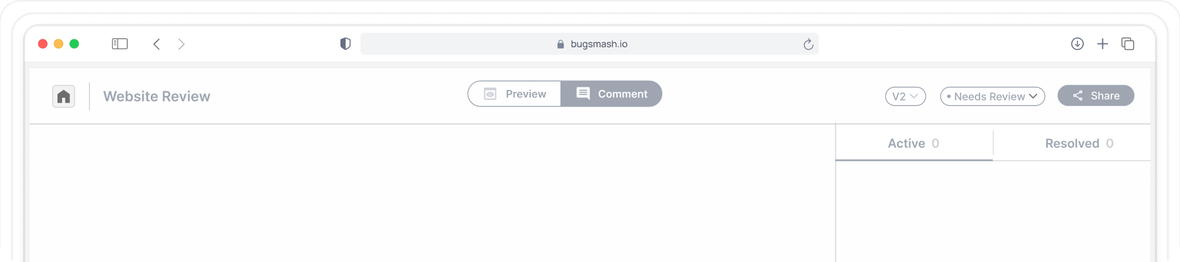
Paste the deployed website or an accessible configured preview URL, send one review link, and collect contextual comments on the rendered front-end application.


Loved by1,250+Agenciesand companies in 100+ countries
Strapi separates the admin panel, Content APIs, Draft & Publish state, Preview configuration and the visitor-facing application.
Four documented boundaries matter before stakeholder review:
Strapi Preview connects the Content Manager to a front-end application. The documentation requires that frontend to be created and set up before Preview is configured.
The admin configuration enables Preview, restricts embedding with allowedOrigins, and supplies a handler that returns the correct frontend URL for each supported content type.
The feature is available but disabled by default. When enabled, Strapi separates draft, modified and published content states.
Full-screen Preview is available on the Free plan. The enhanced Live Preview is available on Growth and Enterprise plans and is currently documented as experimental.
 BugSmash keeps feedback on the browser result:
How it works
Deploy the frontend for published content, or configure Strapi Preview and the framework-specific preview route needed to render a draft.
Paste the accessible frontend or copied preview URL into BugSmash and share the generated review link with stakeholders.
Apply the approved content or frontend changes, publish the intended entries, and verify the resulting visitor-facing page.
Attach feedback to the page location visitors see rather than describing a Content Manager field in a separate message.
Use the normal deployed frontend when the review should reflect Strapi’s published content state.
Use a preview URL only after the project’s frontend route and draft-aware data fetching have been implemented.
Review desktop, tablet and mobile presentation and retain the viewport with each comment.
Keep the page URL, browser, operating system, viewport and screenshot with each website comment.
External reviewers can comment on an accessible frontend without receiving a Strapi administrator account.
Use the separately implemented frontend or a deliberately configured preview URL. Strapi admin access, API permissions, preview secrets and frontend authentication remain separate.
| Your URL | Review by URL | What to do |
|---|---|---|
| Public Strapi-powered frontend | Works | Paste the visitor-facing website or application URL into BugSmash. |
| Accessible staging frontend | Works | Use the staging URL after confirming every intended reviewer can open it. |
| Configured Strapi preview link | Works when accessible | Copy the draft or published preview link after the project’s preview handler and frontend route are configured. |
| Live Preview inside the admin panel | Strapi access required | Use a configured frontend preview link for external review; Live Preview remains embedded in the Content Manager. |
| Protected or authenticated frontend | Access-dependent | Authenticate in the review session or use the Feedback Widget. A pasted URL does not bypass frontend authentication. |
| Strapi admin or Content API URL | Not the visitor website | Review the frontend application that renders the content instead of the admin panel or an API response. |
Add the BugSmash Feedback Widget to the rendered frontend when reviewers must stay inside an authenticated or stateful experience. Install it in the front-end application, not in the Strapi admin panel or Content API.
Keep content modeling and editing in Strapi while clients, product teams and QA review the connected browser experience.

Use Draft & Publish and Preview for authoring, then collect stakeholder comments on the relevant rendered frontend state.
See how
Share the browser deployment while keeping Strapi administration, API credentials and implementation details within the delivery team.
See how
Review responsive screens and content-driven flows with the technical context needed to reproduce each issue.
See howRoute an actionable website comment with its page URL, selected location, screenshot, browser, operating system and viewport context preserved.
Context stays attached from comment to completion.
Send to your workflow
The destination changes. The context does not.
 Jira
Jira ClickUp
 Monday
 Asana
Asana Trello
 Slack
Slack Linear
 Todoist
 Notion
 Airtable
 Zapier
 Make
Make n8n
n8n Webhooks
Keep the frontend beside content PDFs, images, videos, presentations and campaign assets, with feedback and approval in one project.

 MayaMake this hero image full-bleed
 product-launch.mp4
 LeoTrim the intro to 0:03
 AvaSmooth these edges a bit
 SamUpdate the Q3 numbers
 Up to 40% off
 NoahStronger CTA copy here
 ZoeAlign the chart legend
This year marked our strongest period of growth to date. Revenue climbed 42% year over year while our customer base expanded across eleven new markets, driven by continued investment in product.

Operational efficiency improved as automated workflows reduced manual review time by nearly a third. Looking ahead, we plan to double down on infrastructure, deepen key partnerships, and ship the roadmap our customers have been asking for.
 EllaTighten this paragraph
 TheoBoost the warm tones
 MiaCut the dead air at 1:12
Send the separately implemented frontend URL. For draft content, use a preview link only after the Strapi handler and the frontend’s draft-preview behavior are configured.
Paste an accessible deployed frontend or configured preview URL and send a focused review link.